It's been a while since I made a pie crust. The monthly congregational dinner awakens my curiosity with sweet pastries. So I try out the flaky pie dough again, to make some mini tarts.
Recipe: Mini tarts with flaky pie dough (make 1 pie crust)
Ingredients:
Flaky pie dough
- 1 cup + 5 TB King Aurthur unbleached all-purpose flour
- 3/4 tp salt
- 3 TB unsalted butter
- 7 TB shortening, chilled
- about 1/4 to 1/3 cup iced water
Rose water almond filling (for 5 mini tarts)
- 1/3 cup heavy whipping cream
- 1-2 tp rose water
- 2 tp white sugar
- 1 drop red food dye
- 3 raw almonds, soaked and cut into halves
Procedure:
Flaky pie dough
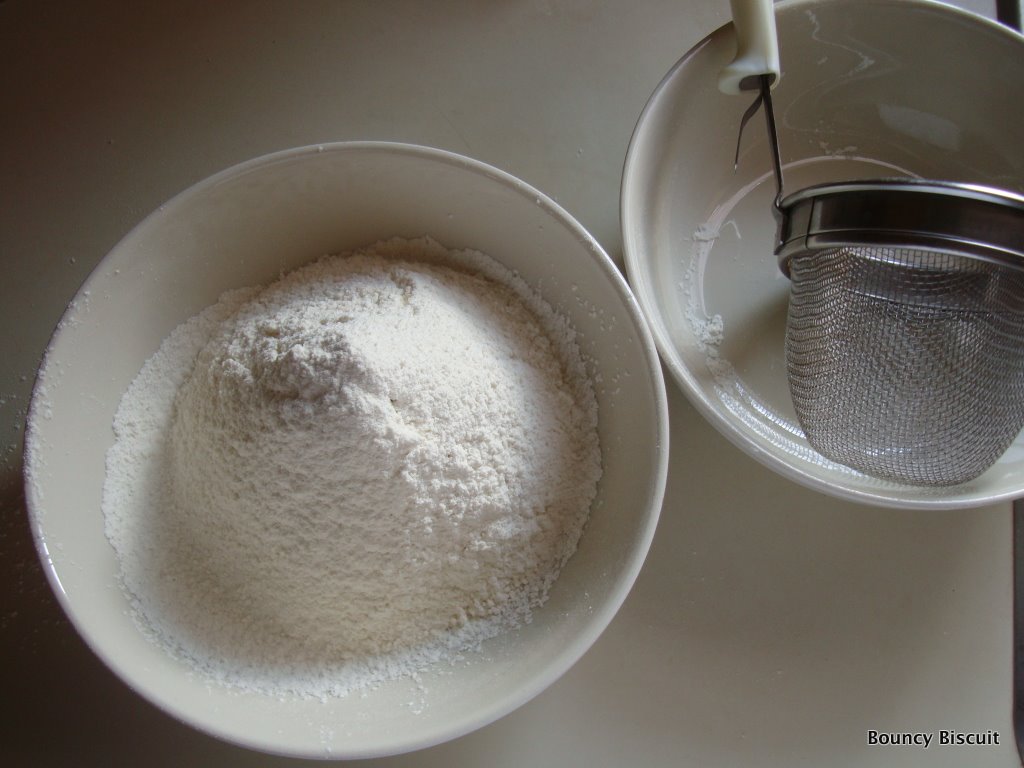
1. Mix flour with salt in a medium bowl.
2. Chop the unsalted butter into small pieces. Add into the flour mixture. Stir it gently so that the butter pieces are all separately coated with flour. Add shortening in small pieces and repeat the same to coat the pieces with flour.
3. Use hands to push the flour mixture gently into a dough ball, adding water gradually. Do not knead. Try to minimize working on the dough.
4. Once the ingredients are incorporated into a dough ball, place it in a bowl and chill for 4-6 hours.
5. After chilling, the dough can be cut into smaller portions for use. If at this point the dough is very flaky and dry, add a little water and rework it a little. To save for future use, wrap in plastic and freeze.
Mini-tart crusts
1. Use about 2/3 of the chilled flaky pie dough to make 15 tart crusts. If the dough has been frozen, defrost in the fridge overnight.
2. Dust the counter or working surface with some flour. Place a dough ball on the surface. Dust its top lightly with flour. Then roll it out from the center. If dough sticks to the rolling pie, apply some flour. Move the dough around after each rolling out to prevent sticking on the working surface. If more than one dough ball is used, roll out each ball separately.
3. Roll dough to about 1/8" thick. Then cut into small discs. Place each disc into a mini-muffin cup. No oiling is needed because the dough is oily enough.
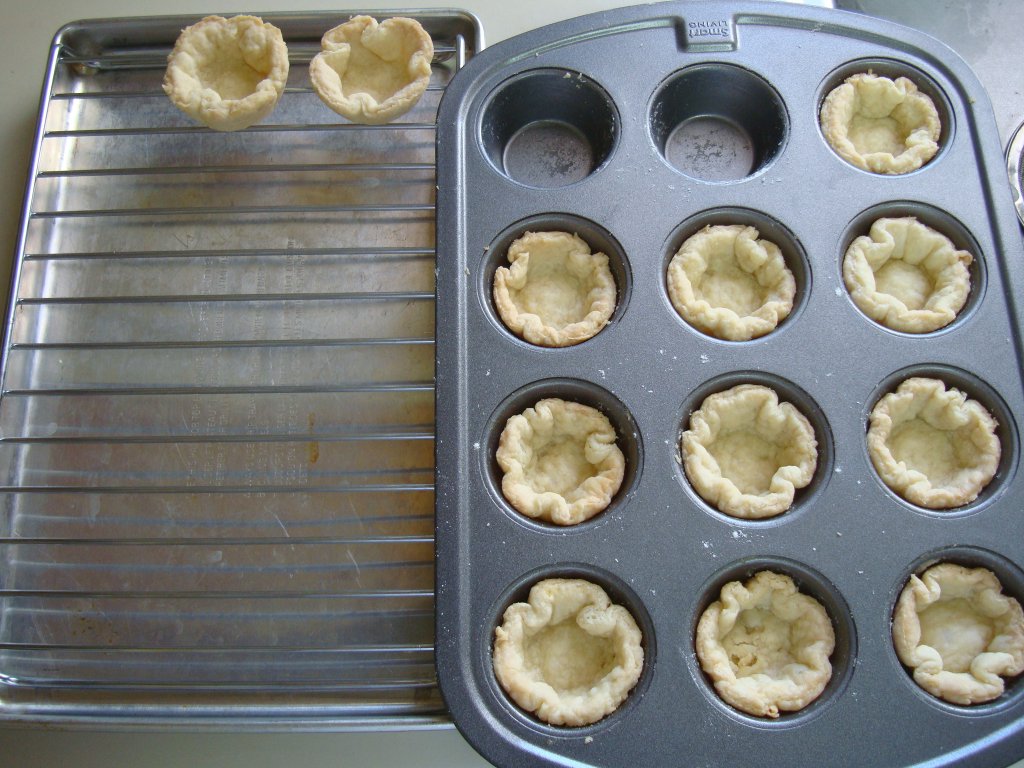
4. Preheat oven to 350F. Bake for 15 minutes or until crusts are very lightly golden.
5. Remove tart crusts from mold and allow to cool on a rake.
6. The tart crusts may be left at room temperature overnight.
To prepare the filling:
1. Mix whipping cream with sugar, rose water and food dye. Beat until the cream can stand. Filling may be chilled overnight before use.
2. Spoon filling into each tart crust and top with almond. Serve within 2 hours.
Results:
Day 1, 11:00am, butter chopped to small pieces about 1/4" long:
Day 1, 11:00am, butter added to and mixed with the flour and salt:
Day 1, 11:01am, shortening chilled overnight:
Day 1, 11:07am, initial mix of the ingredients:
Day 1, 11:18am, all ingredients incorporated into a dough:
Day 1, 5:46pm, dough chilled for 5 hours:
Day 1, 5:47pm, dough cut up, appearing a bit too dry:
Day 1, 5:47pm, the small butter lumps in the dough:
Day 1, 5:51pm, the small amount of gluten developed in the dough due to hydration:
Day 1, 5:57pm, dough reworked with additional water, and then partitioned into small balls to chill overnight:
Day 2, 8:55am, one piece of dough ball after overnight chilling:
Day 2, 8:58am, dough rolled out gradually (observe the butter lumps):
Day 2, 9:00am, dough rolled into a thin sheet:
Day 2, 9:30am, dough cut to the size of tart crusts:
Day 2, 9:48am, dough baked 15 minutes:
Day 2, 9:51am, tart crusts' side:
Day 2, 9:50am, tart crusts' bottom:
Heavy whipping cream mixed with rose water and sugar:
Cream thickening after several minutes of beating:
Cream done and ready to chill until use:
Observations:
1. This flaky pie dough is a little on the dry end. This makes it hard to roll out the dough. However, the final baked crust does not seem to be much affected.
2. I have difficulty distributing the relatively little amount of water over the whole dough. What I do is to add half a teaspoon here and there, then quickly push the dough back together. It works for the two large dough balls, but not for the small one that is from the leftover crumbs.
3. The small dough ball remains very difficult to work with after chilling. During the roll-out stage, I have to rework the small dough ball a few times. It remains very flaky even though I keep adding water. Eventually, I give up rolling it and put it back into the fridge to see what would happen. Four days later, I roll out that small dough ball to make a tart crust. Here are the outcomes.
Small dough ball rolled out; observe how fragile it is (unlike the large dough ball which is very soft, moist and pliable):
Dough sheet made into a tart crust. Because of the fragility of the dough, I make the crust thick:
Tart crust baked about 10 minutes at 350F:
Bottom of the (rather sturdy!) tart crust:
A frozen berries tart made out of the tart crust:
In conclusion, this crust dough seems to be rather tolerant. Whether it's dry or moist, it still makes a sturdy crust when baked.